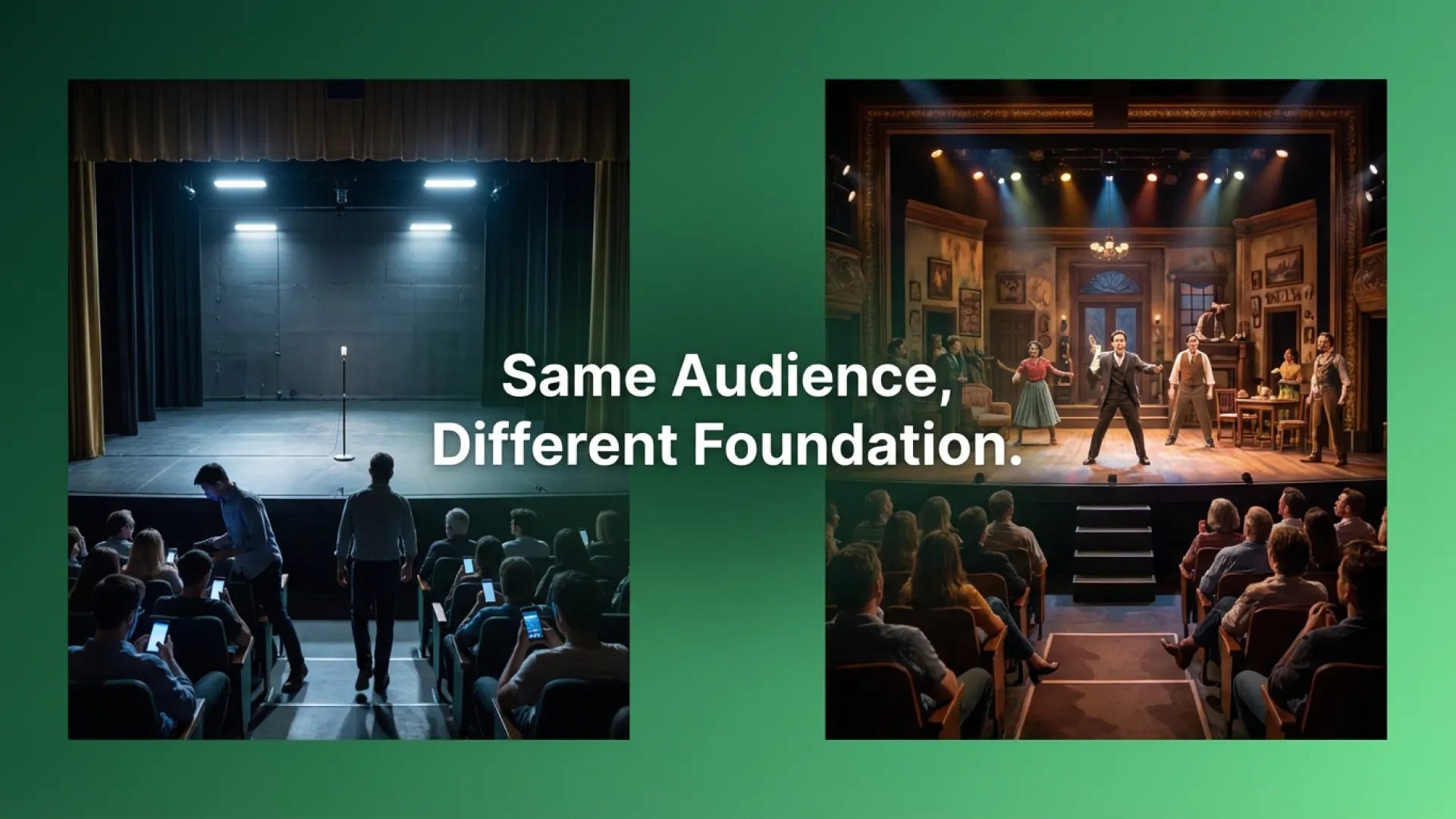
You've seen this server before. Maybe you've even built one.
The channels are set up perfectly. Permissions are configured correctly. Roles work as intended. You send invites. People join. Numbers go up.
Then nothing happens.
Members log in, look around, maybe scroll through a few channels, then leave and never return. Your server has members but no community. Activity but no engagement. Presence but no value.
This is the content foundation problem.
The empty room effect
When someone joins your server and sees empty channels, they make an instant judgment. Nothing is happening here. This community hasn't started yet. I'll check back later.
Except they almost never check back. That first impression becomes permanent. You get one chance to show new members that your community has substance, and most servers waste it by launching before building foundation.
The instinct is to get members in quickly to create momentum. But momentum doesn't come from headcount. It comes from activity, and activity requires context. You can't have genuine conversations in channels with no reference points, no conversation starters, and no evidence of value.
The three-layer foundation
Effective servers build content infrastructure before member acquisition. This foundation has three distinct layers.
The first layer is reference content. This answers fundamental questions before members ask them. What is this community for? Who should be here? What value will members receive? What are the participation expectations? This content lives in welcome channels, pinned messages, and easily accessible resource sections.
The second layer is conversation starters. These are initial posts in key channels that give members something to respond to instead of facing blank space. Not generic "introduce yourself" prompts that nobody answers. Specific questions, interesting frameworks, or valuable insights that naturally invite response.
The third layer is evidence of substance. This could be examples of the value you're providing, frameworks members can actually use, initial resources that solve real problems, or demonstrations that the community creator knows what they're talking about. This layer proves the community isn't just empty promises.
When all three layers exist before the first member joins, new arrivals discover a space that already has momentum. They can immediately understand the value proposition, find conversations to join, and access resources worth their time.
The pre-launch investment
Building this foundation takes time. For most servers, it's 10-15 hours of focused work before sending a single invite.
This feels inefficient to founders who want to see member counts rising immediately. It feels like you're doing invisible work that nobody appreciates. But this invisible work is what determines whether your community actually retains the members you acquire.
I've managed launches both ways. Servers that rush to member acquisition see initial spikes followed by dead zones. Early members join, find nothing to engage with, and leave. By the time you build content, your best early prospects are already gone.
Servers that build foundation first have smaller day-one numbers but exponentially higher retention. Members who join in week two have the same quality experience as members who join in week twenty because the foundation was solid from the start.
The content types that matter
You don't need elaborate video production or extensive course materials. You need clear, practical content that gives members immediate context.
Write a comprehensive welcome message that explains the community purpose in two paragraphs. Create a simple FAQ that answers the five most obvious questions. Post two or three conversation starters in your main discussion channels that invite specific responses.
Develop one valuable framework, template, or resource that members can use immediately. Share one case study or example that demonstrates you know what you're doing. Outline clear next steps for new members so they never wonder what to do.
This doesn't require weeks of preparation. It requires focused effort on content that establishes context.
The launch sequence
Once foundation exists, member acquisition becomes effective. When you invite people, they arrive to substance instead of emptiness. They see active channels worth joining. They find resources worth saving. They understand the value immediately.
Your early members become genuine participants instead of confused visitors. They ask better questions because they have context. They contribute more readily because they see what quality contribution looks like. They stay longer because they experience value on day one.
The agencies and companies I work with always resist this sequence initially. They want members immediately. But after implementing foundation-first launches, they never go back. The retention difference is too dramatic to ignore.
Build before inviting
If your server feels dead despite having members, you probably launched without foundation. You invited people to empty space and wonder why they didn't create community for you.
That's not how it works. Community doesn't emerge from emptiness. It grows from foundation.
Build your content infrastructure. Establish your reference points. Seed your conversations. Then invite members into something worth joining.
You can't ask members to create value in a space that doesn't provide any.
<<<<<<< HEAD