LinkedIn confirmed something most people already suspected.
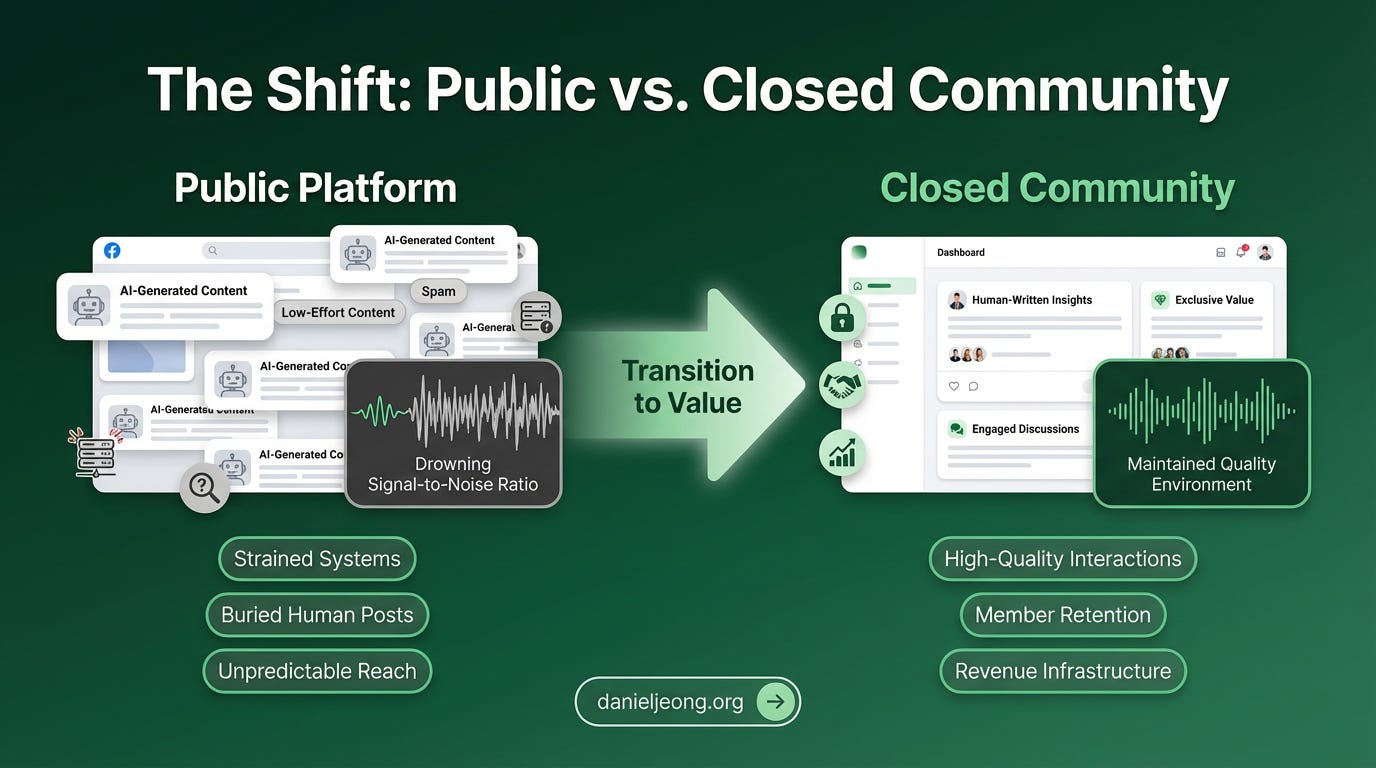
AI-generated content is up dramatically in the last few months. Their systems are struggling. Most people now open ChatGPT, grab a post in under 30 seconds, hit publish.
The platform wasn’t designed for this volume of low-effort content. Their servers, review tools, and ranking systems are feeling the strain.
Their response? A team of data scientists now pushes human-written posts higher in the feed. Everything else gets buried.
This explains why executives are moving to closed communities. Not as a trend. As infrastructure.
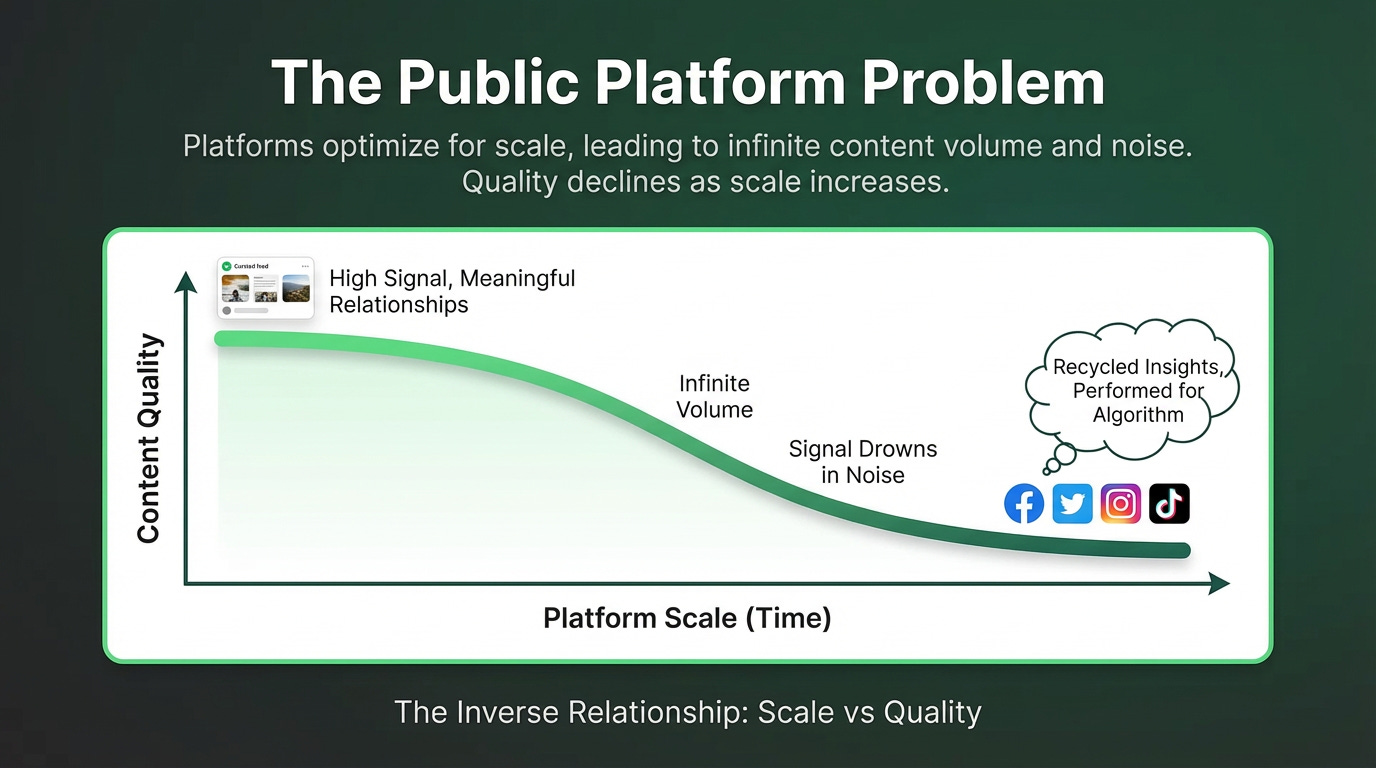
The Public Platform Problem
When platforms optimize for scale, they eventually break under their own weight. LinkedIn’s AI slop problem isn’t unique. Every public platform faces the same dynamic.
Zero friction in content creation means infinite volume. Infinite volume means signal drowns in noise. When signal drowns, people who need actual information leave.
The pattern repeats across every platform that reaches scale. Facebook. Twitter. Instagram. TikTok. All optimized for reach. All struggling with quality.
The executives building revenue around communities saw this coming years ago.
They didn’t leave public platforms because of philosophy. They left because the math stopped working. You can’t have strategic conversations when your feed is recycled insights. You can’t build meaningful relationships when everyone’s performing for an algorithm instead of connecting with people.
Why Closed Communities Work
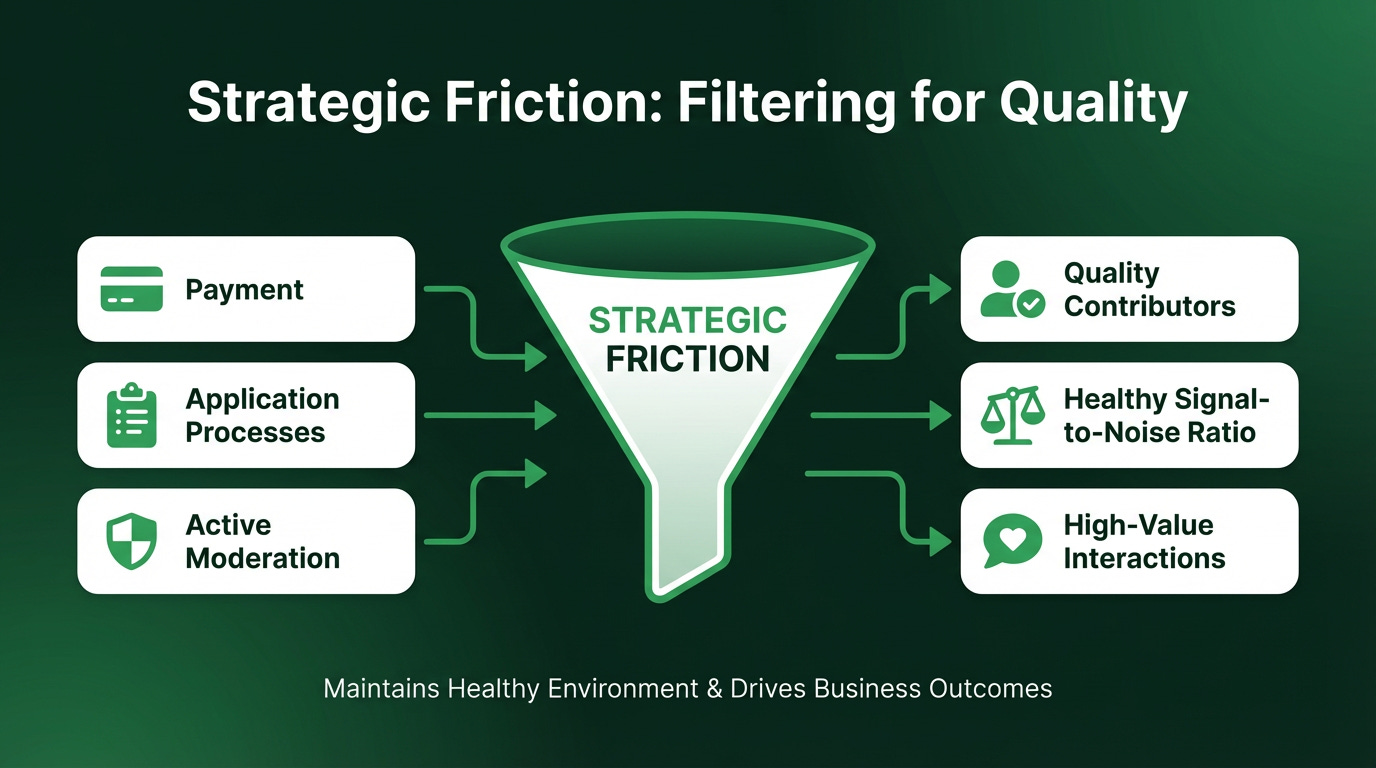
Premium Discord communities solve this problem through friction. Not artificial friction designed to annoy people. Strategic friction that filters for intent.
Payment is friction. Application processes are friction. Active moderation is friction. These barriers don’t exist to create exclusivity. They exist to maintain signal-to-noise ratios that actually work.
When someone pays for community access, they’re not buying content. Content is free everywhere. They’re buying an environment where:
Conversations have depth because people invest time instead of generating responses.
Questions are real instead of rhetorical setups for self-promotion.
The ratio of insight to noise makes participation worthwhile.
Relationships form because people show up consistently instead of dropping in for reach.
This is infrastructure, not luxury.
For executives running communities that drive revenue, the quality of environment directly impacts business outcomes. A community full of AI slop and low-effort engagement doesn’t retain members. It doesn’t create the conditions where people solve real problems together. It doesn’t justify premium pricing.
The Platform Migration
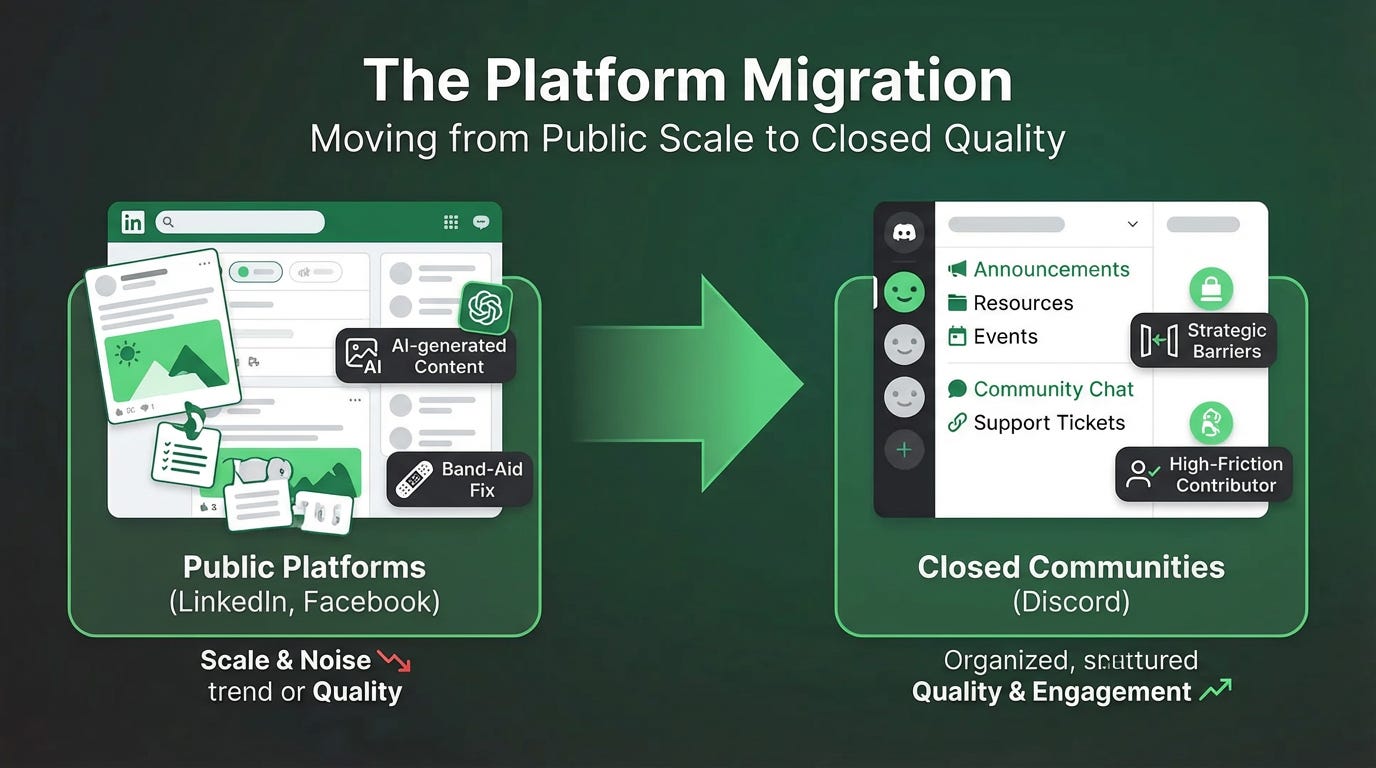
LinkedIn’s AI problem illustrates a larger shift. Public platforms will always chase scale. That’s the business model. Advertisers want reach. Shareholders want growth. Scale is the metric.
But scale and quality move in opposite directions when content creation has no friction. Add AI tools that generate posts in seconds, and the dynamic accelerates.
Some platforms will try to solve this with algorithm changes. LinkedIn is pushing human content higher. Others will add verification systems or quality filters. These are band-aids on a structural problem.
The real solution is architectural. Closed communities with strategic barriers to entry. Environments where friction filters for people who contribute instead of extract.
This explains why executives who manage successful communities treat platform choice like infrastructure decisions. They’re not picking a chat tool. They’re building environments that maintain quality at scale.
Discord works because it’s designed for closed spaces. Slack doesn’t work because it’s designed for teams, not communities. Facebook Groups don’t work because they inherit Facebook’s public platform dynamics.
The architecture matters as much as the content strategy.
What This Means for Community Builders
If your audience is drowning in AI slop on public platforms, your community becomes more valuable. Not as an alternative to social media. As a replacement for what social media used to provide before it broke.
This requires treating community as infrastructure instead of marketing. Infrastructure means:
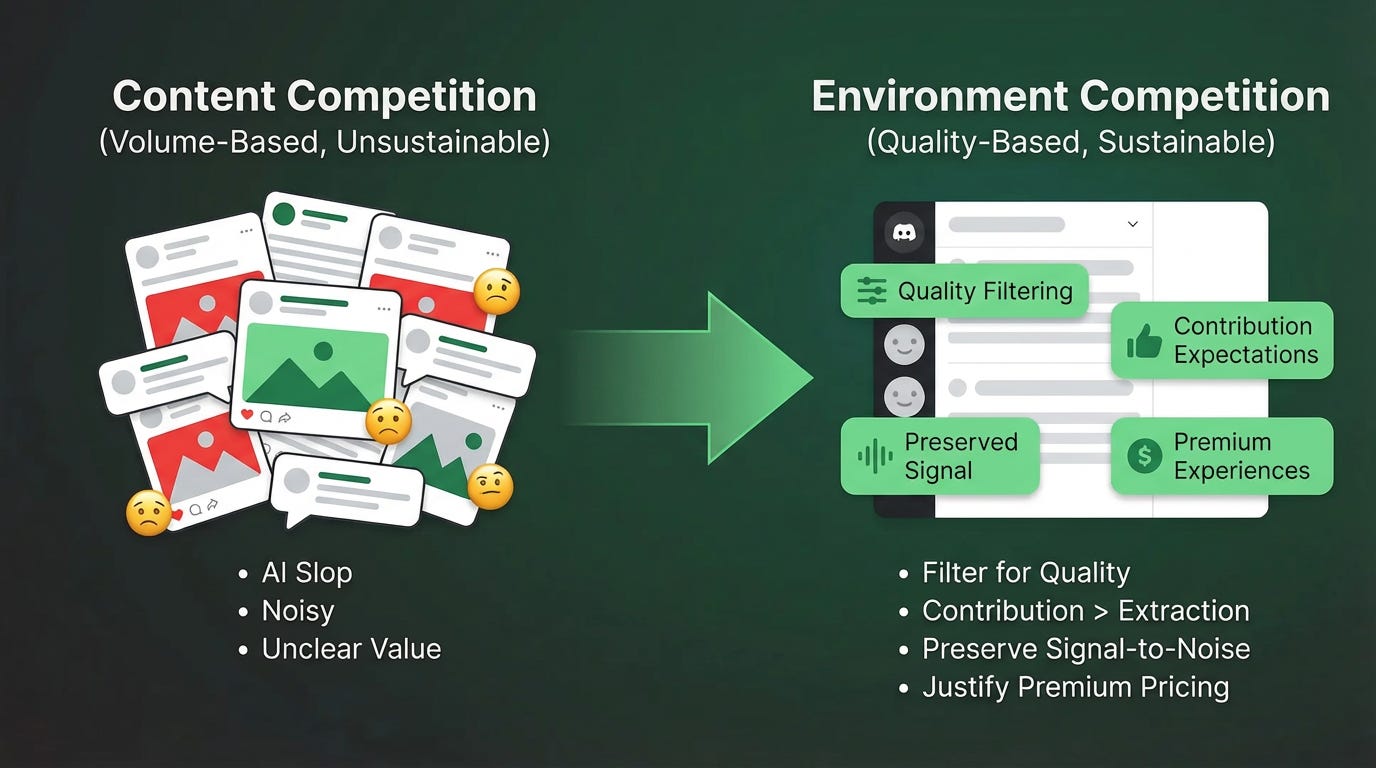
Building systems that filter for quality from day one.
Creating onboarding that sets expectations about contribution versus extraction.
Maintaining moderation that preserves signal-to-noise ratios worth paying for.
Designing member experiences that justify premium pricing.
Communities that succeed in this environment don’t compete on content volume. They compete on environment quality. The executives paying for premium access aren’t comparing your content to free alternatives. They’re comparing your environment to the chaos they’re trying to escape.
The Strategic Opportunity
LinkedIn’s AI problem is your opportunity. When public platforms become unusable, closed communities become essential infrastructure.
The question isn’t whether this shift is happening. The question is whether your community architecture is ready for it.
Are you building environments that filter for quality? Are you creating spaces worth paying for because they solve the problem public platforms can’t? Are you treating community as strategic infrastructure that maintains value at scale?
The executives abandoning LinkedIn aren’t looking for more content. They’re looking for better environments. If you’re building that infrastructure, now is when it matters most.
<<<<<<< HEAD