Your TikTok shop agency Discord is losing creators in the first week. Not gradually over months, but immediately after they join.
You assume it's an engagement problem. So you plan more events, create recognition programs, and launch community challenges.
But the dropout continues. Because the problem isn't activity. It's structure.
The Structural Dropout Pattern
Here's what happens when new creators join most agency Discord servers.
They complete whatever verification process exists, then immediately receive access to twenty channels. General chat, announcements, content submission, questions, resources, introductions, campaigns, success stories, off topic, and a dozen category-specific spaces.
Every channel looks equally important. None has obvious primacy. There's no clear starting point and no obvious next step.
So the creator scans the channel list, feels overwhelmed by options, checks a few channels with no recent activity, and closes Discord.
They might come back once more when they receive a notification. But if that notification leads them back into the same confusing structure with no clear purpose, they stop returning entirely.
You didn't lose them because your offer was wrong. You lost them because your structure didn't guide them from joining to engagement.
What Retention Architecture Looks Like
Agencies successfully retaining creators past the first week build different structural systems.
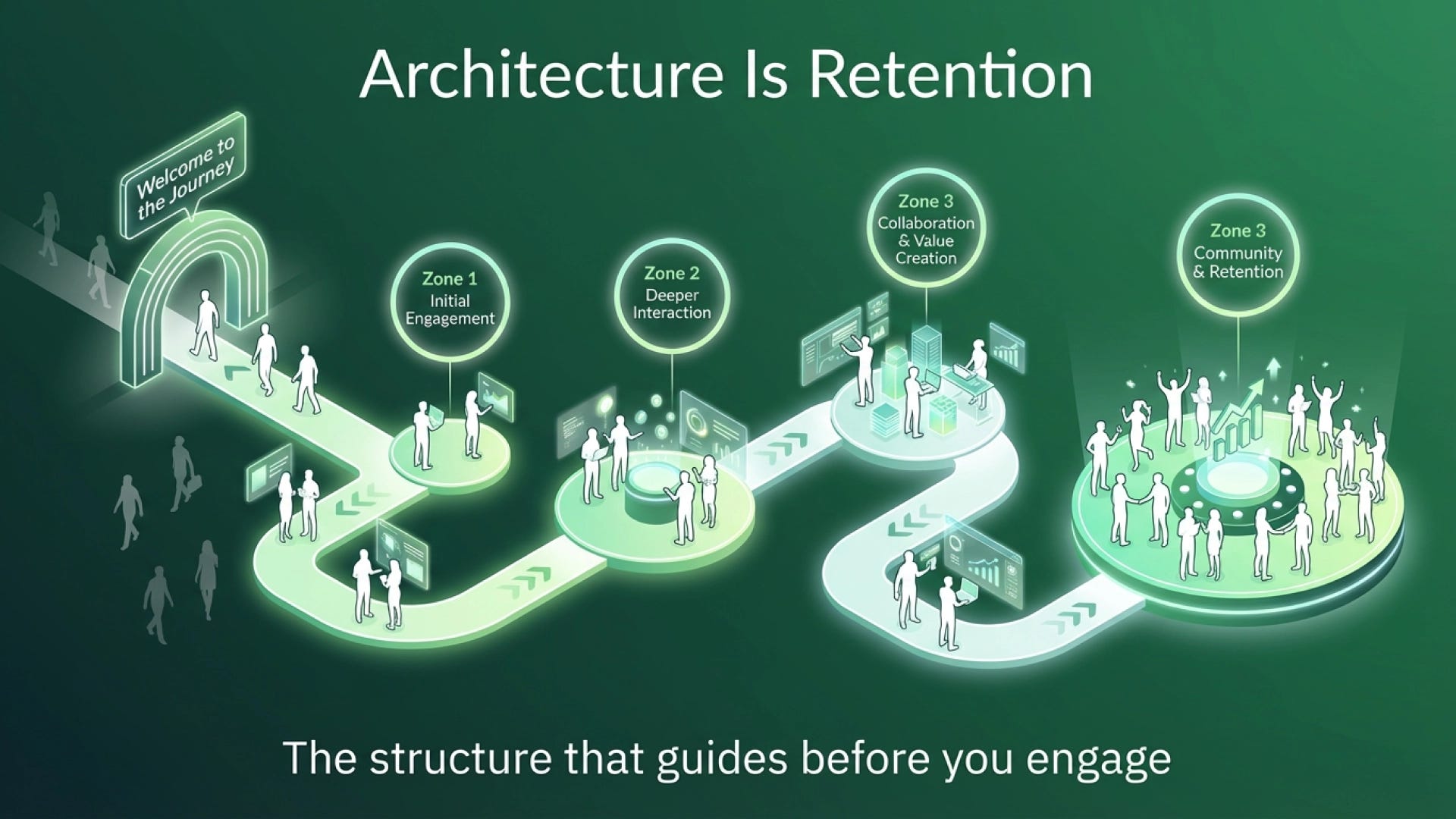
New members don't see everything immediately. They see three or four channels designed specifically for onboarding. A welcome channel with clear instructions and recent activity showing how others engage. An introduction channel where they can share their background. A getting-started guide channel with essential resources.
The structure itself tells them exactly what to do first.
After they introduce themselves or complete initial orientation, new channels unlock. Not all at once, but progressively. Content submission channels appear when they're ready to submit. Community spaces unlock when they've demonstrated basic engagement. Advanced resources become visible when they've completed foundational steps.
This isn't about restricting access to create false scarcity. It's about preventing overwhelm through progressive disclosure.
Your structure guides naturally instead of dumping everything at once and hoping creators figure it out.
The Automatic Guidance Principle
When you're managing 500 creators, you cannot manually guide each person through onboarding. Your structure must do it automatically.
Servers with weak retention rely on human intervention. Team members manually message new joiners, personally explain channel purposes, individually guide people toward engagement.
This works for the first 20 creators. It becomes impossible at 200.
Servers with strong retention build structure that guides automatically. Channel names make purposes immediately obvious. Channel descriptions explain exactly what belongs there. Pinned messages show recent examples of proper use. The architecture itself teaches creators how to engage without requiring constant human explanation.
Retention becomes systematized instead of personality-dependent.
The First Three Days
Creator retention is determined in the first 72 hours, usually in the first 24.
During this window, creators decide whether your Discord is worth returning to. They're not evaluating your events calendar or your recognition program. They're evaluating whether they understand what to do and whether doing it feels worthwhile.
If your structure makes the first action obvious and the first experience positive, they return. If your structure creates confusion or makes them feel lost, they don't.
Agencies keeping 80% of creators past the first month don't have dramatically better engagement programs than agencies losing 60%. They have dramatically better onboarding structure.
They fixed the architecture that determines whether creators know what to do before they tried to add activities on top.
The Structure Audit
If your Discord has high early dropout, audit your structure with fresh eyes.
What does a new creator see immediately after verification? Is it immediately obvious where to start? If they complete that first action, what happens next? Does the structure guide them naturally toward a second action?
If you can't clearly articulate the first three things a new creator should do and your structure doesn't make those three things obvious, you have a retention problem living in your architecture.
You don't fix this with more events. You fix it by rebuilding the structure that determines whether creators engage in the first place.
Retention systems don't live in your engagement calendar. They live in your channel architecture, your role progression, your progressive access systems.
Build structure that guides. Then build engagement on top of structure that retains.
If new creators don't know what to do in their first hour, they won't be there for your first event.
<<<<<<< HEAD