A new member joins your Discord server. They just clicked an invite link. They're curious but not committed. They have about 30 seconds of attention before they decide whether to stay or leave.
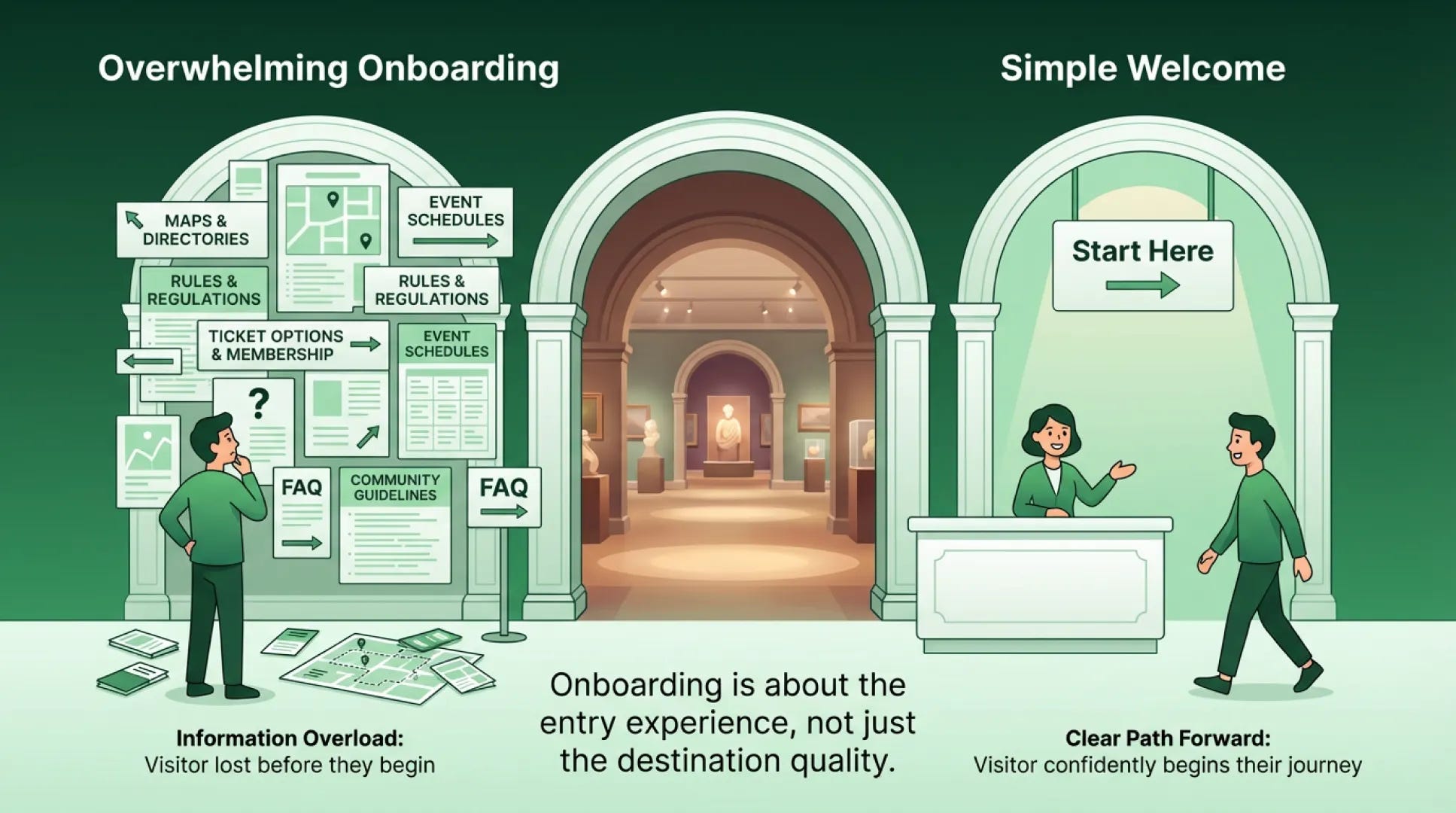
The first thing they see is your welcome channel. It contains:
- Five pinned messages explaining rules, resources, and events
- Three paragraphs about community guidelines
- A role selection menu with 25 different options
- Links to external documentation
- Instructions for verification that require reading two more channels
- A list of upcoming events
- Team introductions
They start reading. After one paragraph, they're already confused about what to do next. After two paragraphs, they're overwhelmed. They close Discord and never come back.
Your comprehensive first channel just killed your retention.
This pattern repeats across hundreds of Discord servers. Founders build welcome channels that try to explain everything upfront. They want new members fully informed before proceeding. This seems logical. It's completely wrong.
The first channel has exactly one job: move new members from "I just joined" to "I just took my first action." That's it. Not educate them comprehensively. Not explain every feature. Not provide complete context. Just get them to take one action that makes them slightly more invested.
The psychology is straightforward. When someone first joins, their commitment level is near zero. They're exploring. They're browsing. They haven't decided if this community is worth their time. In this state, complexity is friction. Every additional thing to read or decision to make increases the chance they'll leave.
If you can get them to take one small action—react to verify, click a button, post an introduction—their commitment level increases slightly. Now they've invested something. They're slightly more likely to take a second action. Each action compounds commitment.
But you need to get to that first action fast. Before they get bored. Before they get confused. Before they close the app.
I worked with a creator program managing 600 members. Their welcome channel was comprehensive. New members saw:
- Welcome message explaining the program (3 paragraphs)
- Rules and guidelines (6 paragraphs)
- Role selection with 15 options
- Resource links to Notion and Google Drive
- Verification instructions
- Team introductions
- Event calendar
They measured completion rates. Of members who joined, only 42% completed verification and accessed main channels. The majority joined, looked at the welcome channel, and disappeared.
We rebuilt the first channel to have exactly three elements:
- One paragraph welcome: "You're in. This community helps creators build successful TikTok Shop campaigns. React below to get started."
- One reaction to verify membership
- Nothing else
All the rules, resources, roles, and explanations moved to a second channel that became visible after verification.
Completion rate jumped to 86%. Same community, same value, different entry experience. The simplified first channel removed friction.
The members who completed verification then saw the comprehensive channel with all information. But they saw it after they'd already invested one action. Their commitment level was higher. They were more willing to read and process information.
The implementation principle is that complexity should match commitment. Low commitment members get simple experiences. As commitment increases through actions taken, you can introduce complexity.
Your first channel should be simple. One welcome message explaining what this community is and why they should care. One clear action to take. Visual simplicity with no competing elements.
Everything else—rules, resources, role options, team intros, event schedules—belongs in subsequent channels. After they've verified. After they've decided to stay. After their commitment level justifies reading more.
Some founders worry that members will miss important information if it's not in the first channel. This misunderstands the alternative. If your first channel is so complex that 60% of members leave immediately, those members miss everything. They don't see your rules because they never get past the welcome channel.
It's better to have 85% of members complete onboarding and then see rules in a second channel than to have 40% of members see rules in the first channel while 60% leave entirely.
The specific first action matters less than having exactly one. React to verify. Click a button. Type a command. Post an introduction. Pick one action that's simple and obvious. Make completing that action the only goal of your first channel.
Your competitors are building comprehensive first channels that educate nobody because nobody reads them. You can build simple first channels that get members to their second action, then educate them when they're ready to learn.
First impressions determine action. Keep the first channel simple enough that action is obvious.
Complexity should match commitment. New members have zero commitment. Start simple. Add depth as they stay.
<<<<<<< HEAD