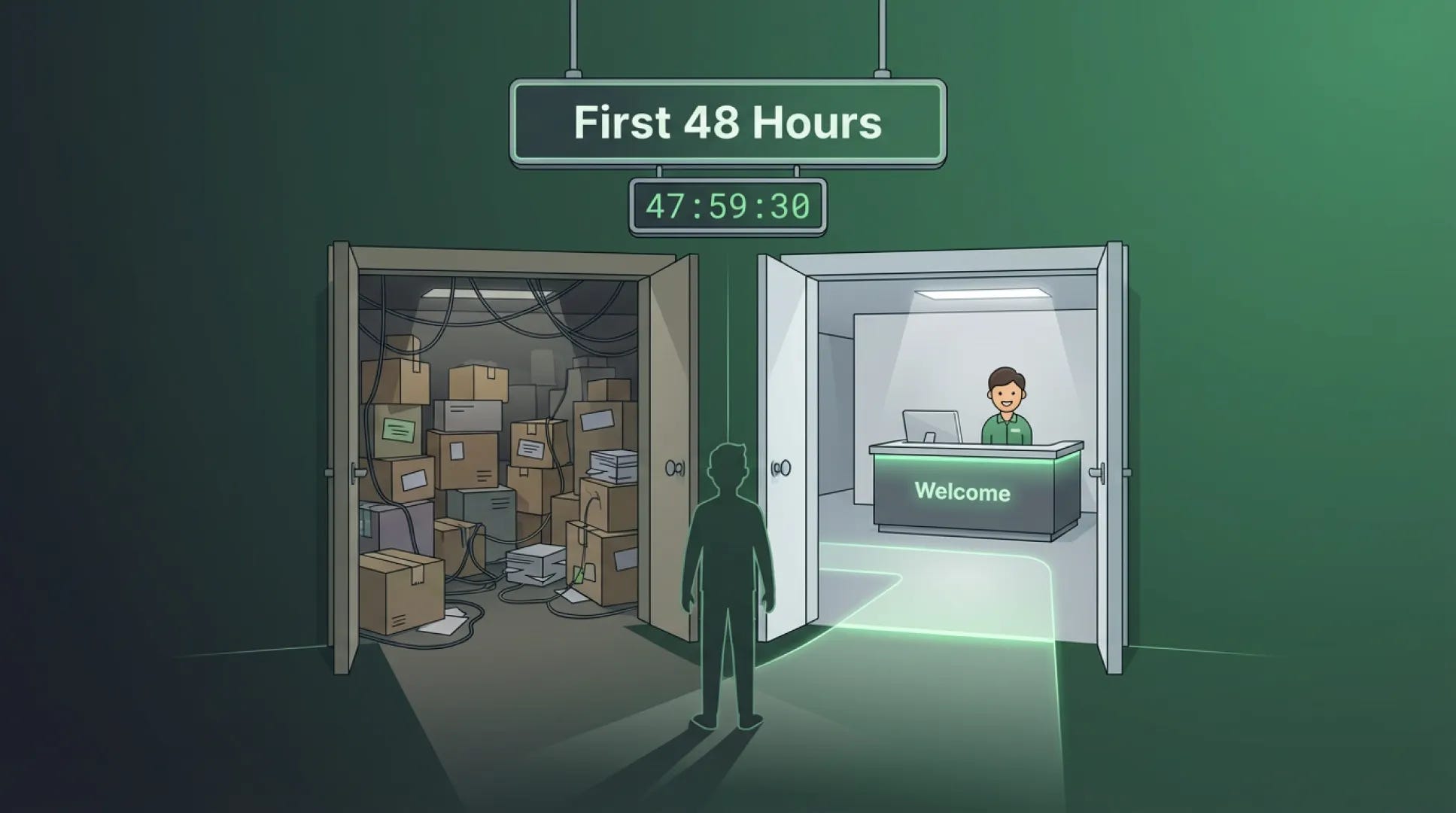
 Most Discord servers have a leak they don't know exists.
You spend time building channels. You create content. You set up roles and permissions. You launch with energy. Members start joining.
Then half of them disappear within 48 hours.
They never post. They never engage. They just vanish. You assume they weren't interested, but that's almost never the real reason.
The problem is your onboarding system. Or more accurately, your lack of one.
The confusion window
When someone joins a new Discord server, they have about 90 seconds of patience. They'll look around, scan the channels, maybe read a pinned message if it's short.
If they don't immediately understand what this space is, what they should do first, or why they should stay, they'll close the app and probably never come back.
This isn't about being impatient. It's about cognitive load. Everyone's attention is split across dozens of platforms. Discord is competing with Slack, email, texts, social media, and actual work. If your server requires effort to understand, you've already lost.
I've seen this pattern across servers managing everything from TikTok shop creator communities to enterprise software support channels. The pattern is universal. Confusion at entry equals immediate dropout.
The private thread solution
The most effective fix is surprisingly simple. When someone joins your server, an automated system creates a private welcome thread just for them.
A real team member gets notified. They join that thread within a few hours. They introduce themselves by name. They explain what the server is for in two sentences. They outline the exact next step. They ask one specific question to start a conversation.
This approach eliminates the public performance anxiety of posting in a general chat. It gives new members a dedicated space to ask basic questions without feeling like they're interrupting. It provides a human touch point that signals someone actually cares they joined.
More importantly, it creates accountability. When someone has had a direct conversation with a real person, they're far more likely to return to the server. They've made a micro-connection. They're no longer anonymous.
Why most servers skip this
The reason servers don't implement private welcome threads is simple. It doesn't scale manually.
If you're onboarding 50 people a week, having a team member personally welcome each one feels impossible. But this is exactly where automation infrastructure becomes critical.
You automate the thread creation. You route notifications to your community team. You template the initial message while keeping it human. You track response rates and follow up patterns.
Servers that build this system retain members at rates 3-4x higher than servers that skip it. The difference isn't marginal. It's transformational.
The systematic approach
Before you invest in content creation, engagement campaigns, or growth initiatives, fix your onboarding. Build the welcome thread automation. Train your team on response protocols. Measure your 48-hour retention rate.
If members aren't surviving the first two days, your community doesn't have a content problem or an engagement problem. It has a structural problem at the entry point.
The agencies and companies I work with always start here. We don't discuss advanced engagement mechanics until the foundation is solid. Because the most brilliant community strategy in the world is worthless if new members leave before experiencing it.
Your server might be exceptional. But if people can't figure out where to start, they'll never discover that.
Fix the first 48 hours. Everything else follows.
<<<<<<< HEAD