Your Discord server has 400 members. Your analytics show 380 of them haven't posted in the past week. The 20 who are active are mostly your team trying to start conversations that die after two replies.
You post discussion prompts. You ask questions. You try to facilitate engagement. Nothing sticks. The server feels like a ghost town despite the member count.
Meanwhile, another server in your niche has 250 members and 180 of them are actively discussing something every day. Multiple conversation threads happening simultaneously. Members tagging each other. Real engagement.
The difference isn't community management tactics. It's content context.
Discord engagement doesn't happen in a vacuum. People need something to react to. If your only content is internal Discord posts, you're asking members to generate discussions from nothing. That's difficult and most won't do it.
But if you're consistently creating content on external platforms and your Discord members are consuming that content, they have context. Your TikTok raises a question in their mind. Your YouTube video makes them think differently about something. Your LinkedIn post challenges conventional wisdom. They come to Discord not because you asked them to engage, but because they have thoughts and reactions they want to share.
The external content creates the conversational fuel. Discord is where that fuel burns.
I analyzed engagement patterns across 15 communities I've managed. The correlation was clear. Servers attached to creators posting 3+ times weekly on external platforms had 60% higher member engagement than servers that operated as standalone entities.
The mechanism makes sense. Content platforms are designed for broadcasting. Discord is designed for conversation. When you broadcast an idea on TikTok, you reach a wide audience. Some of them have reactions and follow up thoughts. They can comment on the post, but TikTok comments are shallow by design. If they're in your Discord, that's where they go for deeper discussion.
The content serves as shared context. Everyone saw the video. Everyone heard the premise. Now the Discord conversation can build on that foundation instead of starting from zero.
I worked with a founder building a community around sustainable business practices. He launched a Discord and invited his network. Initial engagement was okay but declined week over week. By month three, posting volume had dropped 80%.
We looked at his content production. He was posting occasionally on LinkedIn but not consistently. His Discord was operating in isolation. Members would join, look around, see generic discussion prompts, and have nothing compelling to respond to.
We built a content engine. Three short form videos weekly on TikTok and LinkedIn covering controversial takes on business sustainability. One long form YouTube video weekly diving deep into implementation strategies. All content included a call to join Discord for deeper discussion.
Within six weeks, Discord engagement jumped 250%. Members were joining conversations about specific points from the videos. They'd reference timestamps. They'd share their own experiences related to the topics. They'd debate the takes from the TikToks.
The content gave them material to work with. They weren't trying to manufacture conversations from nothing. They were reacting to ideas they'd just encountered.
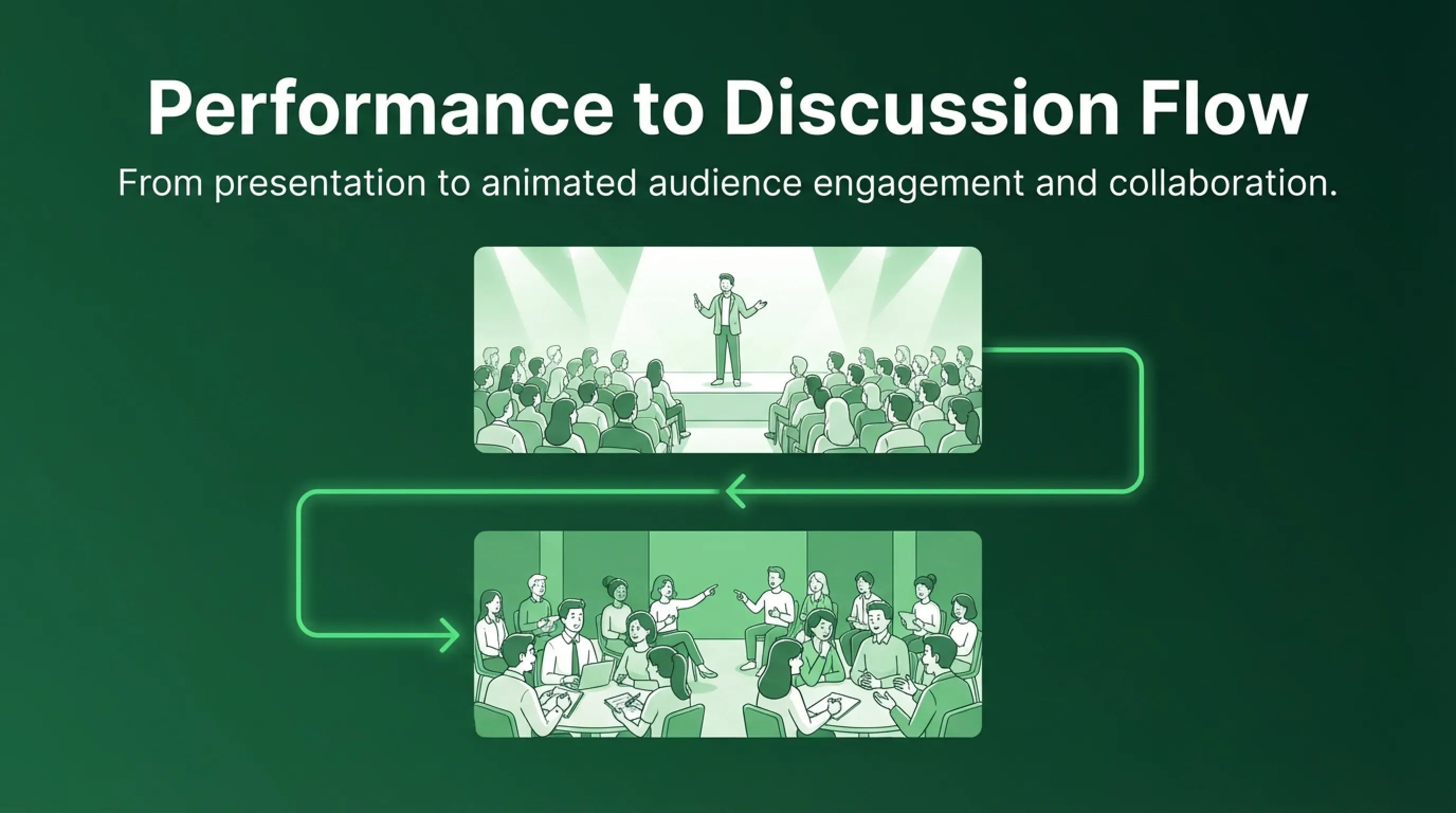
The structure created a flywheel. Content raised questions, Discord answered them. Discord discussions revealed new questions, content addressed them. Each platform fed the other.
This explains why servers attached to active creators naturally engage while servers built in isolation struggle. The creator's audience is already consuming content, thinking about ideas, forming reactions. Discord becomes the natural place to express those reactions.
Standalone servers don't have that foundation. They're asking cold audiences to warm themselves up, which rarely works at scale.
The implementation is straightforward. You need consistent content production on at least one external platform. The platform matters less than consistency and quality. Three valuable TikToks per week beat daily low effort posts.
Your content should have a point of view. Generic information doesn't create discussion. Controversial takes, contrarian positions, and strong frameworks do. You want people finishing your video with thoughts they need to express.
Every piece of content should include a clear Discord invitation. Not just a link, but context. Join the Discord to discuss this. Share your take in our community. Debate this position with others who saw this video.
Inside Discord, reference your content. When you post a new video, share it in a dedicated channel. Ask specific questions related to the content. Prompt discussion by highlighting the most controversial point.
Your team should model the behavior. When someone posts a reaction to your content, engage with it. Ask follow ups. Draw out their thinking. Show that discussing content is valued.
Some communities resist this approach because they want Discord to be self sufficient. This misunderstands how conversation works. Even offline communities rely on shared context. Book clubs discuss books everyone read. Professional networks discuss industry news everyone saw. Discord is no different. Shared content creates shared context.
The beauty of this model is that it scales. Content reaches unlimited people. The subset who want deeper discussion comes to Discord. You're not trying to manufacture engagement from nothing. You're channeling existing interest into a structured space.
Your competitors are wondering why their Discord is dead despite decent member counts. They're posting engagement prompts that nobody responds to. They're frustrated because community building feels like pushing a boulder uphill.
You can build natural engagement by recognizing that content creates context and context creates conversation. Make content that gives people something to think about. Invite them to Discord to discuss it. Facilitate the conversation that naturally emerges.
Public content is your stage. Discord is your green room. Perform on stage so people have something to discuss backstage.
<<<<<<< HEAD